
American Property, American Violence: Introduction
Every acre of the United States was owned, at some moment, by someone for the first time. The property did not come before the violence. The violence is what made the property.
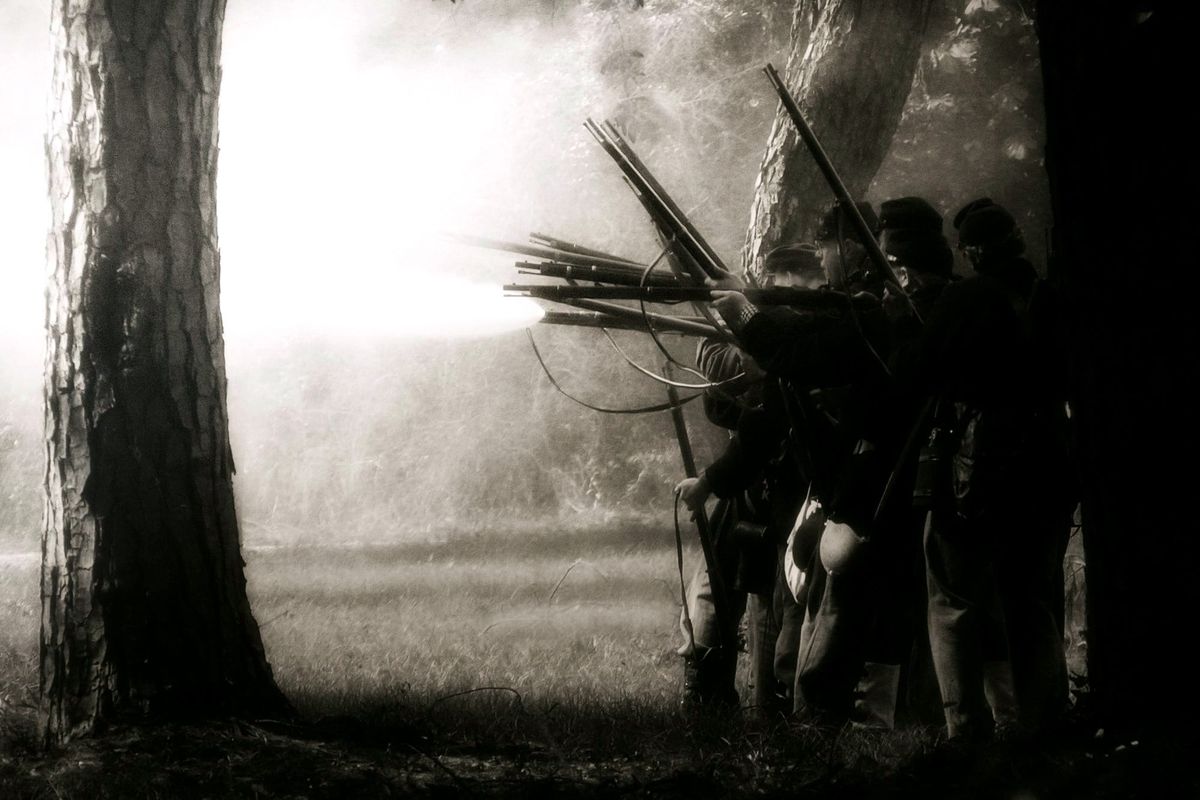
Southeast of Atlanta, on a patch of forest along a creek in DeKalb County, the police built a training compound. For a few years that ground was some of the most fought-over acreage in the country—opponents called the project "Cop City," the people in the trees called the woods the Weelaunee Forest, and a great many of them were arrested. I was one of the people trying to stop it.
I'm writing a book that runs through this same ground, and somewhere in the research I kept turning up stories that were too big and too far afield to fit inside it, but too good to leave sitting in a folder. I'm putting them here instead.
It started with a smaller and, I thought, duller question: who owned this ground before it was worth fighting over?
The answer turned out not to be dull at all.
Every acre of the United States was owned, at some moment, by someone for the first time. Some like to imagine that first owner as a farmer with a plow and a clear conscience—the homestead, the handshake, the deed. But pull the chain of title back far enough on almost any American ground and the homestead dissolves. What you find at the bottom is a treaty signed under duress, a lottery wheel, a war. The property did not come before the violence. The violence is what made the property.
The forest that we fought to keep covers two lots. In the survey they are Lots 82 and 83 of the 15th District, 202½ acres each, laid off nearly square, the standard ration of the Georgia land lottery that carved them out. That lottery could only dice them into lots because, months earlier, the First Treaty of Indian Springs had pried the land loose from the Muscogee (Creek) Nation and handed it to the State of Georgia to raffle off. The river the forest is named for had a name of its own before it had a lot number. On Henry Tanner's 1823 map it is "Weelaunee," from the Muscogee words for brown-yellow water. The people who called it that were marched west so a clerk could call it District 15.
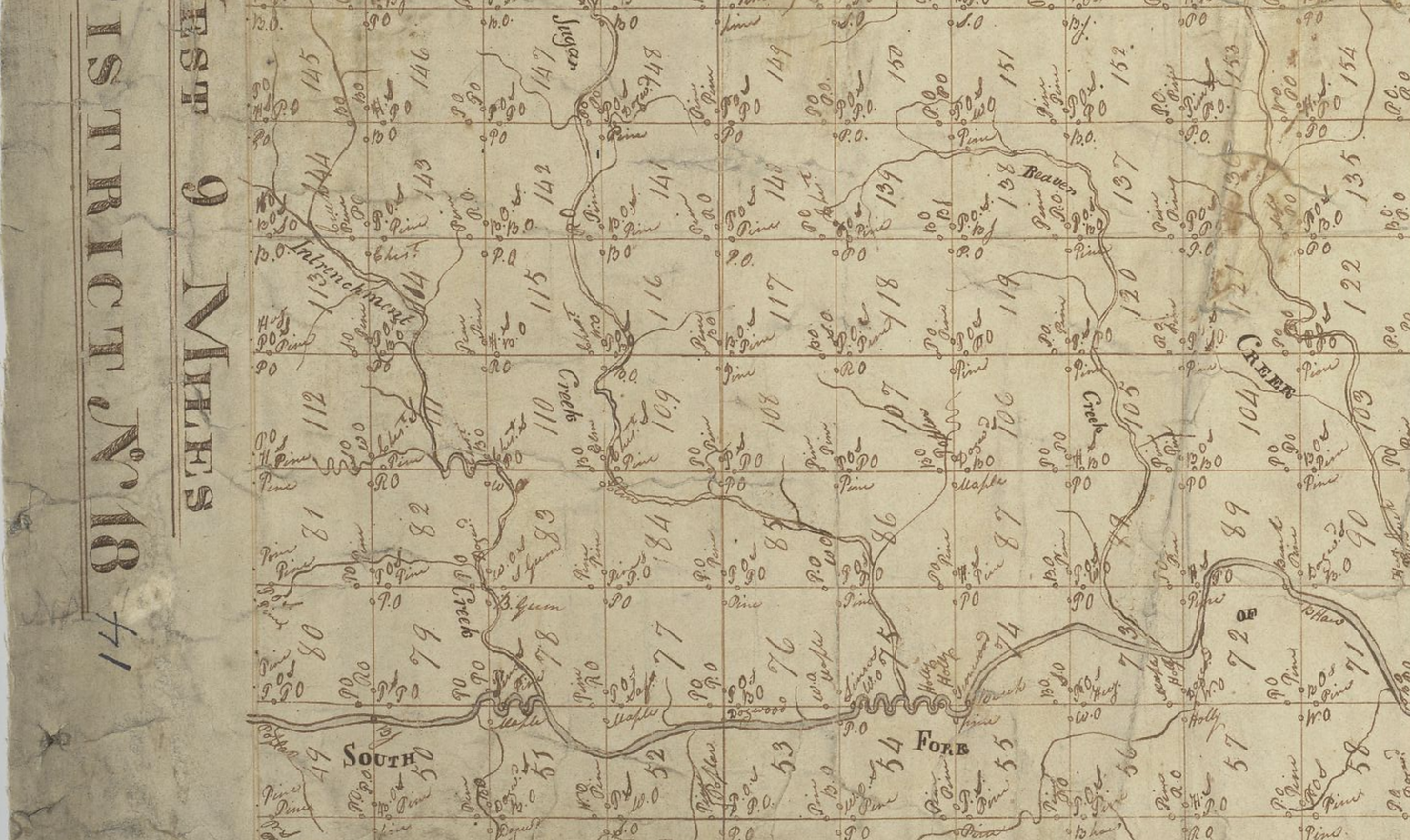
Across the nineteenth century those two lots passed through the hands of a chain of men, and this series is about them, one at a time. There is a Muscogee headman who sold his nation's commons and was killed by his own people for selling too much of it. There is a Savannah privateer whose paper claim to a Georgia lot is the least interesting thing about him, because his real cargo was human and some of the people he seized vanished into a Supreme Court case that treated them as "proceeds." There is a wounded veteran of the Revolution who won his lot in the raffle and never once came to see it. And there are the men who made the ground produce—as it was always done here, with other people's labor and other people's names left off the record.
Read in sequence, they are six American types, and the chain of title is a syllabus in how this country made property out of whiteness and force.
A couple of notes about the method. The archive has silences. A courthouse fire took DeKalb's records before 1842, and a quarter-century of ownership may simply be gone. I won't paper over that hole—I'd rather stand at the edge of it and tell you what fell in, because what survives in an archive is never the same thing as what mattered. I'll name the dispossessed and the enslaved wherever a document lets me, and I'll mark the silence plainly wherever a document refuses. When I geolocate a lot or pin down which William Morris is our William Morris, I'll show you how, so you can check my work or redo it.
The stories here are about people—six of them—and the country you can see through them.
Subscribe so you don't miss the first installment: the broker who sold a nation and was shot before dawn for it.