
The Seeds of Prairieland
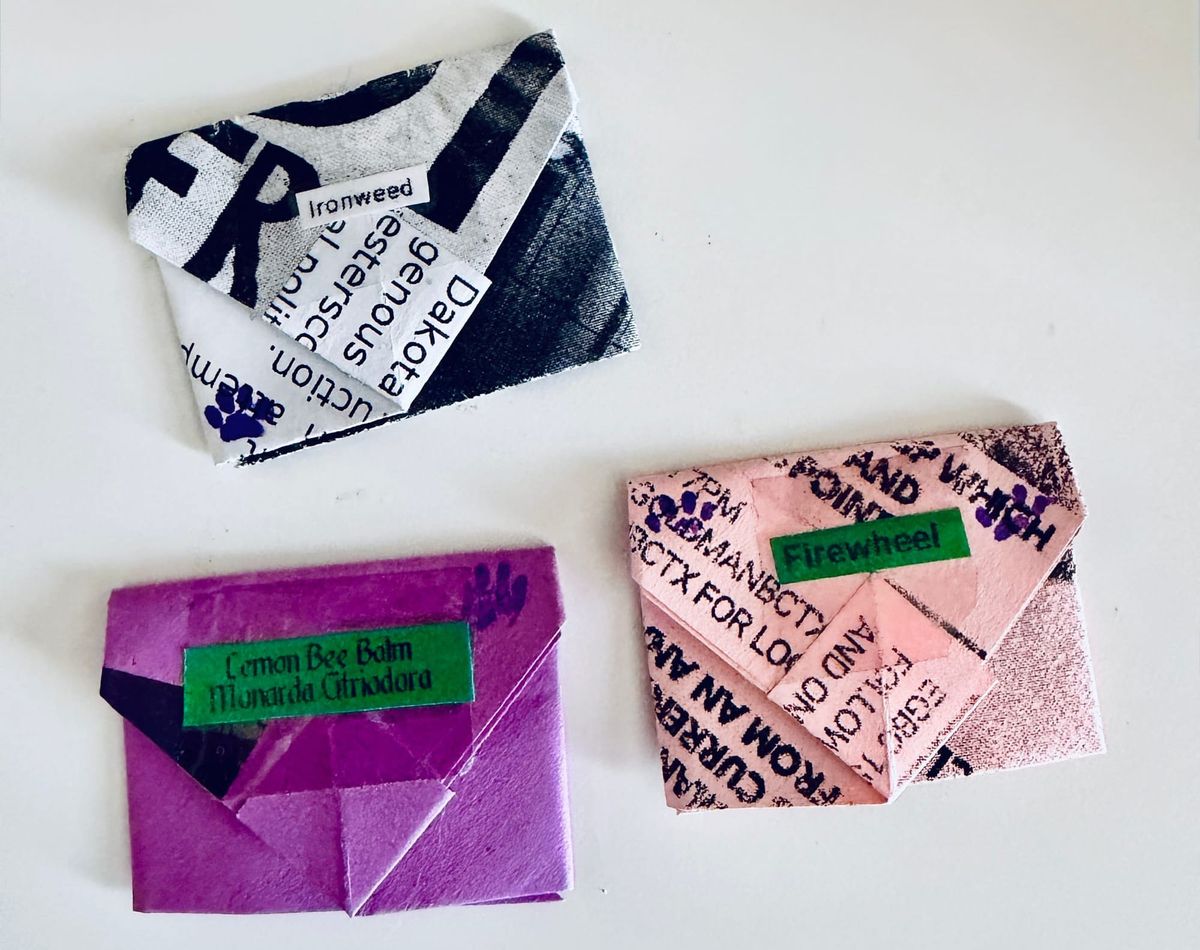
The first time I met Savanna, Liz, and Ines, they gave me seeds for my garden. I don’t actually have a garden, but I love plants, and so I took the seeds in the hope that I’d get to plant them before too long. Wrapped in origami made from recycled zine pages, carefully labeled in tiny type, the ironweed, firewheel, and bee balm seeds are still on my desk, waiting for a patch of dirt, some sunlight, and a little rain.
On the day Liz and Savanna were each sentenced to 50 years in prison, I held those makeshift seed packets in my hand and thought about the kindness they represent: gifts given freely by strangers who were nonetheless already comrades, who I came to think of as friends, in the years before they were arrested and imprisoned.
On July 4, 2025, a group of people gathered in the dark outside the Prairieland Detention Center in Alvarado, Texas, and set off fireworks—a noise demonstration meant to carry to the people locked inside. That summer, less than six months into the second Trump presidency, ICE was detaining people faster than it could house them; Prairieland, built for around five hundred, was running well over capacity. Among the people locked inside that night was Leqaa Kordia, a Palestinian woman from New Jersey who had been arrested at a 2024 Columbia protest against the war in Gaza and then, a year later, detained over an expired student visa—what her lawyers called retaliation for her activism. The government had also accused her of providing "material support" to a terrorist group, pointing to money she'd sent to relatives in Gaza; an immigration judge found no evidence of it. She had been at Prairieland since March, sleeping on the floor of an overcrowded room because there weren't enough beds. She was still there on the Fourth of July—one of the people the noise was meant to reach.
The protesters were, by their own attorneys' account, loosely affiliated, many of them strangers to each other. The planning, and the talk of firearms that prosecutors projected onto courtroom screens, involved some of them and not others; Savanna, Liz, and Ines had no part in it, arrived on their own, and left when the facility's guards asked them to go. In the days after her arrest, Savanna didn't even know there had been a shooting.
A police officer, responding to a 911 call from ICE officers inside the facility, was wounded by gunfire that night. He was airlifted out, treated, and released within a day. The state called it a premeditated attack and charged everyone at the scene with attempted murder. But how the officer was actually wounded—by a shot aimed at him, or by a ricochet from rounds fired to drive officers back from a fleeing protester—was never settled. The only protester who fired that night has written that they acted to stop the police officer as he took aim at the back of a running, unarmed protester: that their fire was suppressive, meant to send people to the ground and away, not to kill. The physical evidence of how the wound was made stayed contested through the federal trial.
In March, a jury convicted nine of the more than 20 people who were eventually arrested in connection with the events of July 4, 2025. The defense had called no witnesses and put on no evidence of its own, resting on the argument that the government hadn't proved its case. The jury disagreed, finding the eight people who had stood outside the facility guilty of providing material support to terrorists, of rioting, and of two explosives charges for the fireworks used in the noise demo. Benjamin Song was found guilty of attempted murder. Daniel Sanchez Estrada, who was never at Prairieland, was convicted of concealing a record after the fact, and he and his wife Maricela Rueda of conspiring to conceal it.
This week the first sentences came down: 100 years for Song, the only protester who fired; 50 years each for Savanna, Liz, and three others. Estrada, who was never at the scene, received a 30-year sentence; his wife, 70 years. According to courtroom observers, Judge Reed O'Connor explained from the bench that he was giving the maximum sentences to send a message to "anyone who shares a similar ideology."
Ines, meanwhile, is set to be sentenced on July 1. As they were convicted on the same counts as Liz and Savanna, it seems likely that they will receive a 50-year sentence as well.
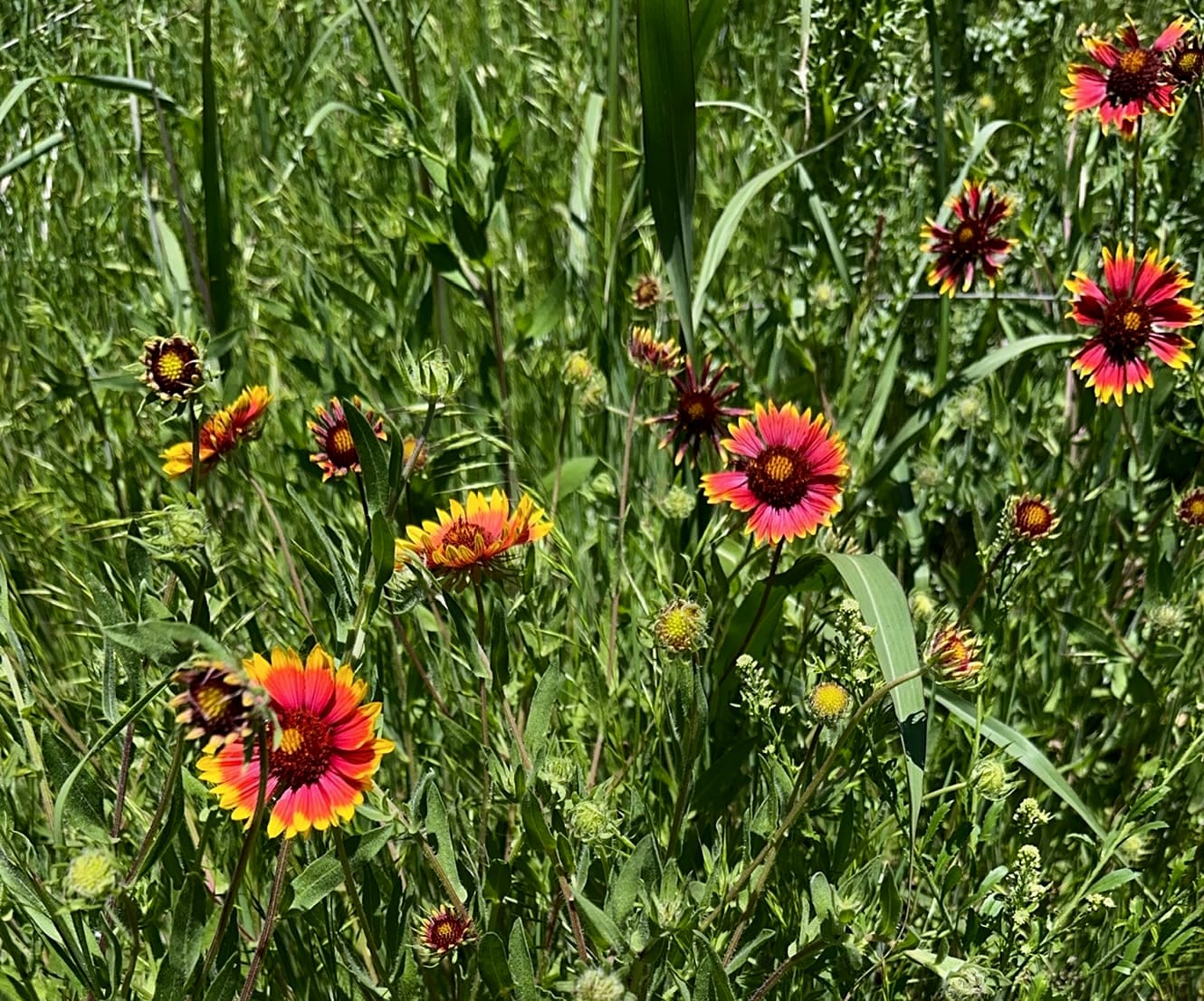
In April 2023, I was still so new to Texas that I didn't actually know what firewheel was. Now I know it covers the hillsides every spring, but at the time I was fresh from Atlanta, where I'd been writing about the movement to Stop Cop City and the forest they were trying to defend. In the wake of the police murder of an unarmed activist, Georgia had arrested and charged dozens of people with domestic terrorism.
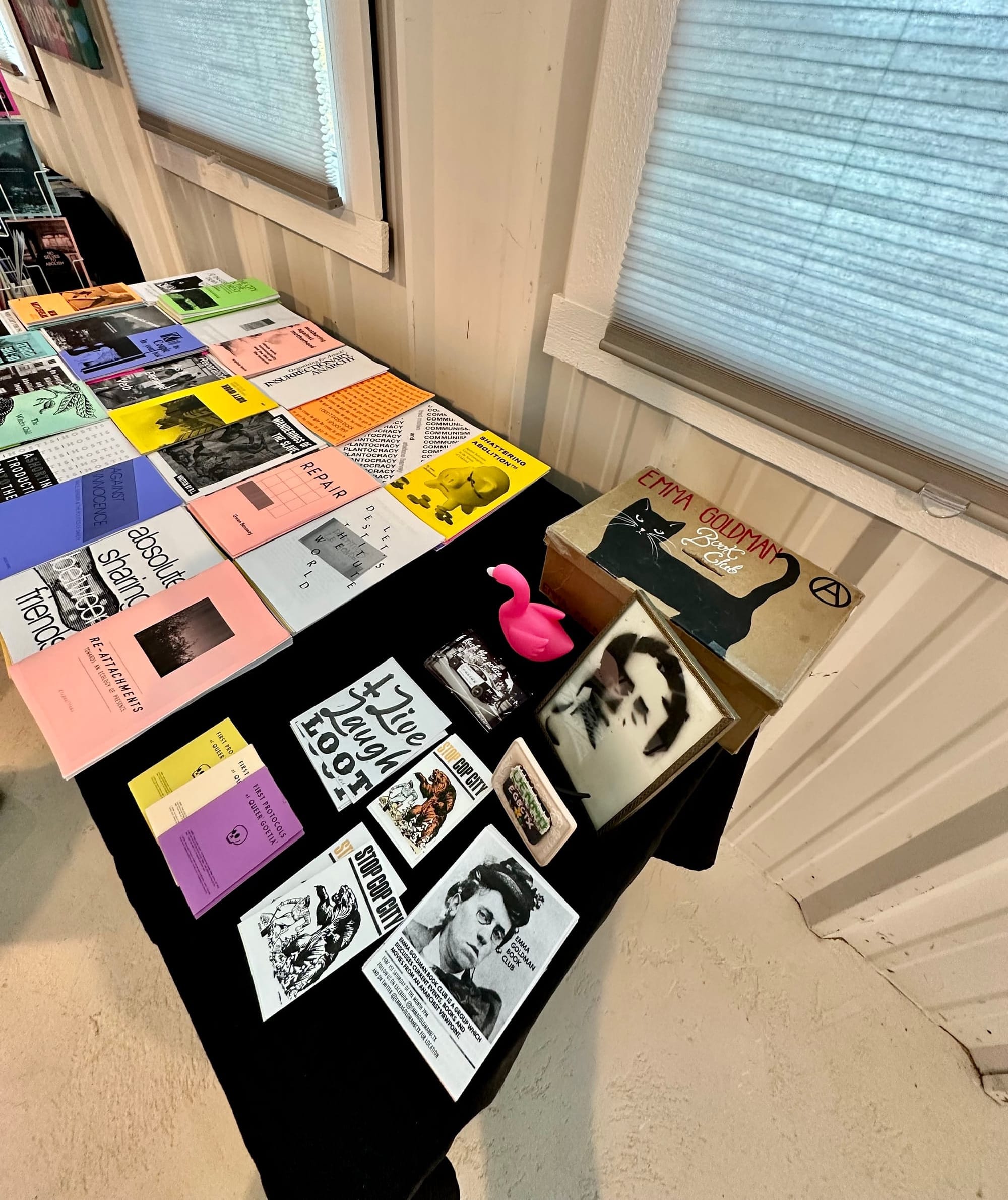
Ines made room for me. There was a book club meeting at a community center, and when I said on social media that I wanted to host a letter-writing night for the Cop City defendants—people then reading their mail in jail—Ines folded it into the evening. There were maybe 12 of us total. We ate popcorn and wrote letters. I collected the letters in a shoebox so I could drop them in the mail. Then we picked up copies of a zine and took turns reading it aloud and discussing it. We talked about the history of queer protest movements. I asked someone to explain Gilles Deleuze to me. Everyone was soft spoken; I don't think I'd ever been in a room so gentle. When I left, they sent me home with stickers, extra zines, and three packets of seeds.
We stayed in touch on social media. Ines mostly posted pictures of the local plants I was still learning to identify. They taught me how to recognize greenbriar, and now I think of them every time I wander into a patch of it while hiking. It looks like ivy but its thorns are sharp, prickly, as so many prairie plants are.
The three sets of seeds on my desk are prairie plants too. Ironweed, firewheel, bee balm—not the kind you buy off a rack at the hardware store, but the kind that belong to a particular stretch of ground. Firewheel: Gaillardia pulchella, red-and-yellow sunbursts that blanket the roadsides deep into summer, even after other wildflowers have given up in the Texas heat. Ironweed: Vernonia baldwinii, tall, stubborn, purple, with roots deeper than you'd guess, the kind ranchers burn and mow and still can't be rid of. Bee balm: Monarda citriodora, pretty enough in spring, skeletal and pale in winter, but it draws the bees as promised, and smells like it ought to be good for something.
They're all built to live with fire. The prairie burns, the tops go to ash, and the roots and seeds—down past where the flames reach—hold on and send the green back up. Firewheel is often the first thing to color burned ground. You can scorch the surface of this land and it keeps what it needs underground, waiting.
The detention center sits on exactly that kind of ground. It's called Prairieland—a fenced place named for the thing a fence can't hold, built on a prairie that, left alone for a single season, would put up firewheel right to the wire.
I should tell you that my husband doesn’t want me to write this story. Not because he thinks it doesn’t matter, but because he fears it matters too much, to the wrong people, in the wrong way.
He has reasons. Two years ago I was doxxed for the first time, while I sat with Liz, Ines, and Savanna on the sixth floor of a Fort Worth courthouse taking notes on the felony trial of an antifascist. The person who set the dox in motion was a self-described "Christian fascist" who has spent years building bridges between elected Republicans and men in swastikas, and who has learned that the surest way to make both groups pay attention is to point at a crowd of queer people and the people defending them and say the word antifa.
The arrests that led to that trial happened at a drag brunch in Fort Worth on April 23, 2023, six days before I sat in that community center eating popcorn and writing letters with Ines, Liz, and Savanna. That afternoon, three antifascists were shoved to the ground and arrested while a far-right reporter circled with a camera on a stick, ready to feed footage, charging documents, names and addresses, to a network of extremists who coordinate harassment campaigns. A Christian-nationalist group later sued some of the people who'd shown up to defend the drag show. In the days before the brunch, an anonymous account had asked the Tarrant County district attorney to investigate an "antifa militia" supposedly planning to descend on it.
At least two of the people caught in that invented emergency—one arrested at Fort Brewery, one named in the lawsuit—have been arrested in connection with the events at Prairieland. The conspiracy theory workshopped by a handful of local extremists to get a drag show shut down has now been adopted wholesale by the federal government.
On September 22, 2025, the president signed an executive order designating antifa a "domestic terrorist organization." There is no such thing. No statute lets the government brand a domestic group a terrorist organization, and "antifa" has no roster, no office, no accounts to freeze, because it was never an organization to begin with. It is a description of a politics, and, increasingly, a word you can lay over any gathering you'd like to break up. Three days after the EO, a memorandum, NSPM-7, directed federal agencies to "disband and uproot" the networks behind such "violence." You cannot disband a thing with no members. You can only decide, case by case, who counts as one—so the order didn't name an enemy so much as authorize the hunt for one.
The same month, federal agents raided Liz and Ines's home a second time and seized the printers and book-making equipment they used to make zines—the same printers that made the pages that became the seed packets still sitting on my desk.
They had been arrested in July, immediately after the noise demo. But no federal terrorism case against them existed yet. The federal indictments for terrorism didn't come until October and November, after the executive order and the national security memorandum. The government drew the category knowing they already had people to put inside it.
And so a fiction that once lived in a right-wing conspiracist's Twitter reply now lives in a federal sentencing memorandum. It is why people I know, and care about, may grow old in prison.
I used to try to convince my husband that what I do—sitting in courtrooms and community centers with antifascists, listening and telling their stories—isn’t all that dangerous. No one is likely to get shot at a letter-writing night, after all. But it turns out he was right, and I was wrong. The charge that took my friends away was material support: not hurting anyone, not firing anything—just being near enough to be perceived as helping. The idea of such a charge was built for people who funnel money or weapons to foreign armies; it lets the government convict you without proving you hurt anyone, so long as you helped something it has named. Pointed at my friends, it asks almost nothing. The government's theory of support is fireworks in a parking lot, a zine carried from one town to the next, a name left in or removed from a group chat, a refusal to tell agents what you know.
Strip away the word "terrorism" and that list is just the ordinary substance of taking care of one another: showing up, printing things, staying in touch, keeping faith with the people beside you. The case is an argument that solidarity is the crime—that the letters and the rides and the book clubs are the apparatus, and being part of them is enough.
Maricela Rueda’s husband just got 30 years in prison for moving a box of zines from their house after her arrest. She got 70 years in prison for being at a demonstration, and after that, for talking on the phone to her husband. I have a shoebox I once filled with letters and mailed to people in jail. I have some of the same zines as my friends. I've been to book club. And I am writing this down.
The seeds my friends pressed into my hands are still on my desk, wrapped in the pages the government calls terrorist material. Ironweed, bee balm, firewheel: prairie plants, built to outlast a burn, the kind that keep underground what the fire can't reach.
Fifty years is long enough to plant a prairie and watch it burn and green over a dozen times. But firewheel isn't just the name of a flower—it is also the name of a firework, a burst of red and yellow thrown up into the dark, loud enough to carry past any fence. O'Connor said the sentences were a message. Here is my reply: think how much noise we can still make.