
The Broker
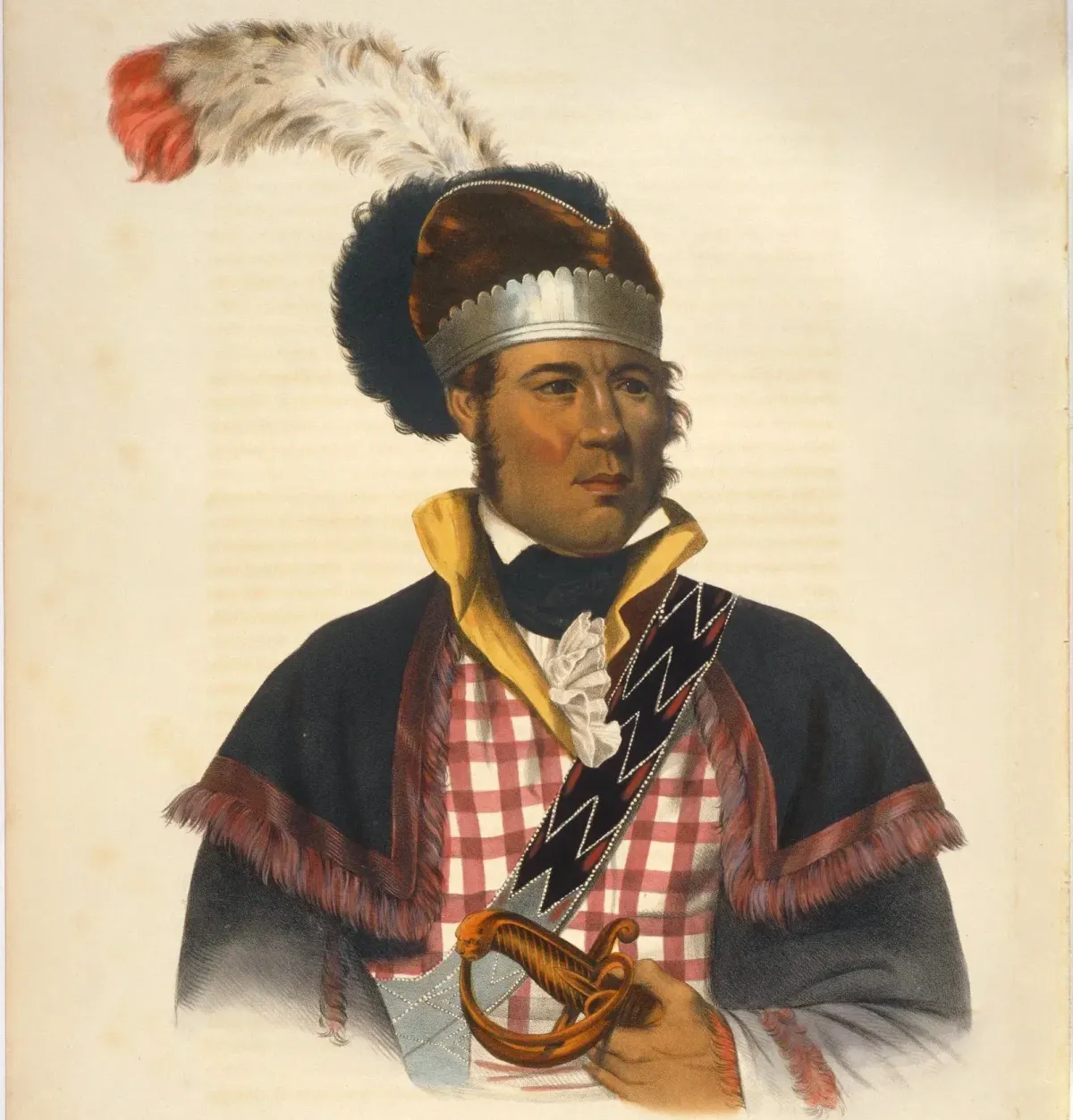
Every deed, every tax roll, every mortgage and sheriff's sale and quitclaim that touches Lots 82 and 83 of District 15 for the next two hundred years sits on top of a single sheet of parchment with William McIntosh's name on it—first among the Creek signatures, in his own hand.
Every acre of America was owned, at some moment, by someone for the first time. Pull the deed back far enough and you rarely find a homestead; instead you find a treaty signed under duress, a lottery wheel, a war. American Property, American Violence traces two lots of Georgia ground through the nineteenth century, one owner at a time, because the property did not come before the violence. The violence is what made it. This is the first installment—catch up with the introduction.
The Muscogee Nation had a law. Its communal land—the Nation's ground, held by no one citizen because it belonged to all citizens—could not be ceded without the Nation's consent, and a chief who sold it anyway had committed a capital crime. William McIntosh supported that law. In the spring of 1825, he was executed under it.
The sentence was carried out at Lockchau Talofau (Acorn Bluff), McIntosh's plantation on the Chattahoochee in what is now Carroll County, before dawn on April 30. Menawa, an Upper Creek chief, brought some two hundred men. They set fire to the house to bring him out, and killed him by gun and by blade when the flames did their work. An elderly Creek chief named Etomme Tustunnuggee died with him, guilty of the same sale.
McIntosh is where this series has to start, even though he never owned an acre of the two lots this series is about. He never drew them in a lottery, never paid taxes on them, never even saw them, as far as I can tell. What he did was make them ownable. Every deed, every tax roll, every mortgage and sheriff's sale and quitclaim that touches Lots 82 and 83 of District 15 for the next two hundred years sits on top of a single sheet of parchment with his name on it—first among the Creek signatures, in his own hand.
The White Warrior
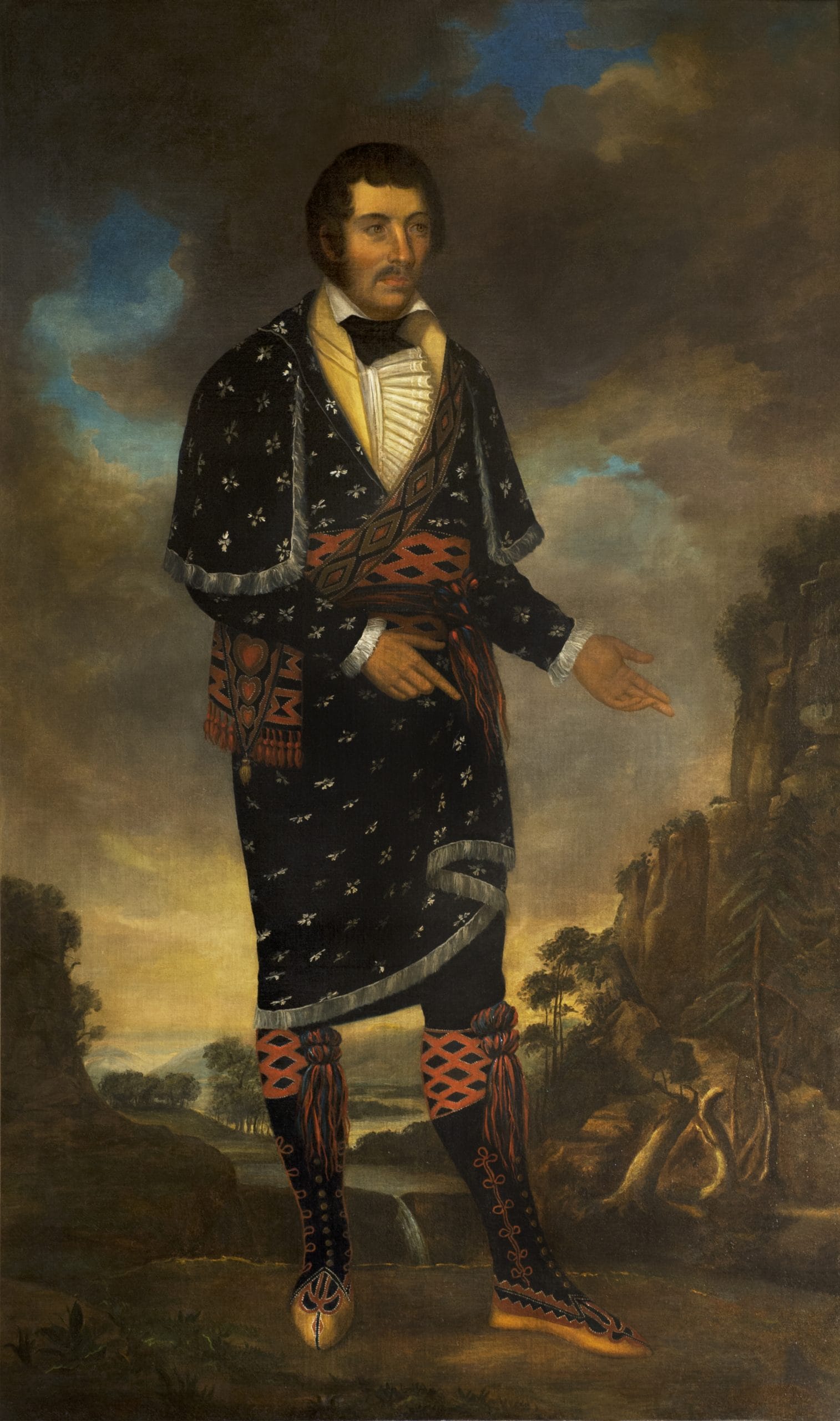
McIntosh was born around 1778 at Coweta, one of the principal Lower Muscogee towns, to a Scottish father—Captain William McIntosh of Savannah—and a Muscogee mother, Senoya of the Wind Clan. His Muscogee name was Tustunnuggee Hutkee: White Warrior. He grew up fluent in English and in the politics of both worlds, and he spent his life monetizing the doorway between them.
He breaks the story America likes to tell about this period—the one with settlers on one side and Natives on the other and a frontier in between. McIntosh was a Muscogee headman and a cousin of George Troup, who would become governor of Georgia. One of his daughters married into the family of David B. Mitchell, another Georgia governor turned federal Indian agent. He was a planter in the full Georgia sense of the word: he backed the federal "civilization" program and owned two plantations worked by enslaved people—Lockchau Talofau, where he died, and a second property at Indian Springs. When the Red Stick Muscogee rose against exactly the world McIntosh was building, he led Lower Creek warriors for Andrew Jackson at Horseshoe Bend in 1814 (a defeat that cost the Nation some 22 million acres at the Treaty of Fort Jackson) and then served the United States again in the First Seminole War.
The first treaty
McIntosh sold Muscogee land to the United States twice. The second sale is the famous one—it's the one that killed him. But it's the first, quieter sale that concerns us, because it's the one that turned a forest along a river called Weelaunee into a numbered square a white man could win.
On January 8, 1821, at "the Indian Spring, in the Creek Nation"—a mineral spring in present-day Butts County, on ground McIntosh controlled—two U.S. commissioners, Daniel M. Forney and David Meriwether, concluded a treaty with the Creek Nation. (You will sometimes read that this treaty was signed at McIntosh's inn. It wasn't, because the inn didn't exist yet—he built it two years later, and it hosted the second treaty. In January 1821 there was just the spring, and the man who claimed the ground around it.)
By the treaty's first article, the Nation ceded everything east of a line running up the Flint River and bounded in the north by the Chattahoochee—the wedge of Muscogee homeland between the Flint and the existing Ocmulgee River boundary, roughly four million acres by later estimates (the treaty itself counts in rivers and ridgelines, not acres).
For it the Nation received $10,000 in hand, $40,000 after ratification, and then a dwindling schedule of annuities—fourteen payments over fourteen years, capped, no interest, payable "in money or goods and implements of husbandry [farming]." The United States also agreed to assume debts that Georgia's own citizens claimed against the Creek, up to $250,000.
The treaty followed the strategy Thomas Jefferson had set down twenty years earlier, in a letter urging that the government's trading houses run the tribes' leading men into debt, "because we observe that when these debts get beyond what the individuals can pay, they become willing to lop them off by a cession of lands."
Debt, as David Graeber argued, has never been chiefly about the money; it is an instrument for making people governable.
McIntosh's own fee is written into the first article, in a proviso "excepting and reserving to the Creek nation" two tracts from the cession: 1,000 acres laid off in a square with the Indian Spring at its center, and 640 acres on the Ocmulgee "so as to include the improvements at present in the possession of the Indian Chief General M'Intosh" (his plantation). The land was reserved, nominally, to the Nation but it was held, in fact, by McIntosh. The treaty pays the broker in the very currency it is busy converting—his fee carved out of the commons in the same clause that liquidates the commons. McIntosh's reward for turning his nation's land into property was that some of it became his property first.
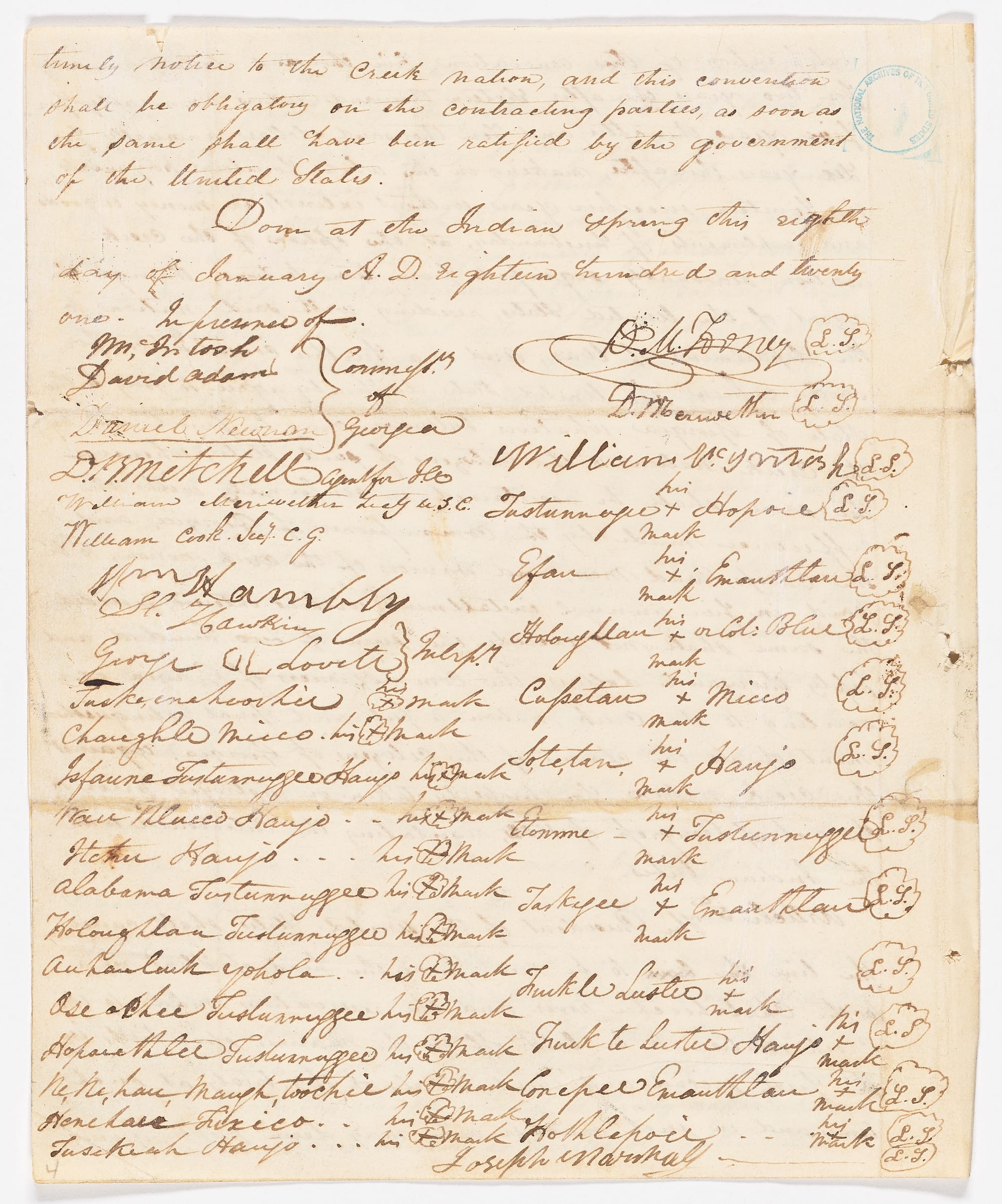
One more name on that parchment is worth holding onto. The witnessing federal agent, D. B. Mitchell—the ex-governor whose family McIntosh had married a daughter into—was later removed from the Creek Agency under federal charges of smuggling enslaved Africans through it. We'll encounter him again. The illegal Atlantic slave trade is not a digression from this land's story; it's the subject of the next installment.
Laundering the land
Georgia did not sell the ceded land, and mostly it did not grant it to veterans or homesteaders in the way other states did. Georgia raffled it.
On May 15, 1821, the General Assembly authorized a lottery to distribute the more than four million just-ceded acres. Surveyors cut the wedge into five new counties —Dooly, Fayette, Henry, Houston, and Monroe—and diced the counties into districts and the districts into lots of 202½ acres each, laid off nearly square, about 2,970 feet to a side. Eligibility to draw: free white male, eighteen or older, a citizen, three years resident in Georgia (plus widows and the guardians of orphans, the machinery's idea of mercy). If you had an unmarried daughter or your husband died in the War 1812, you were entitled to 2 draws.
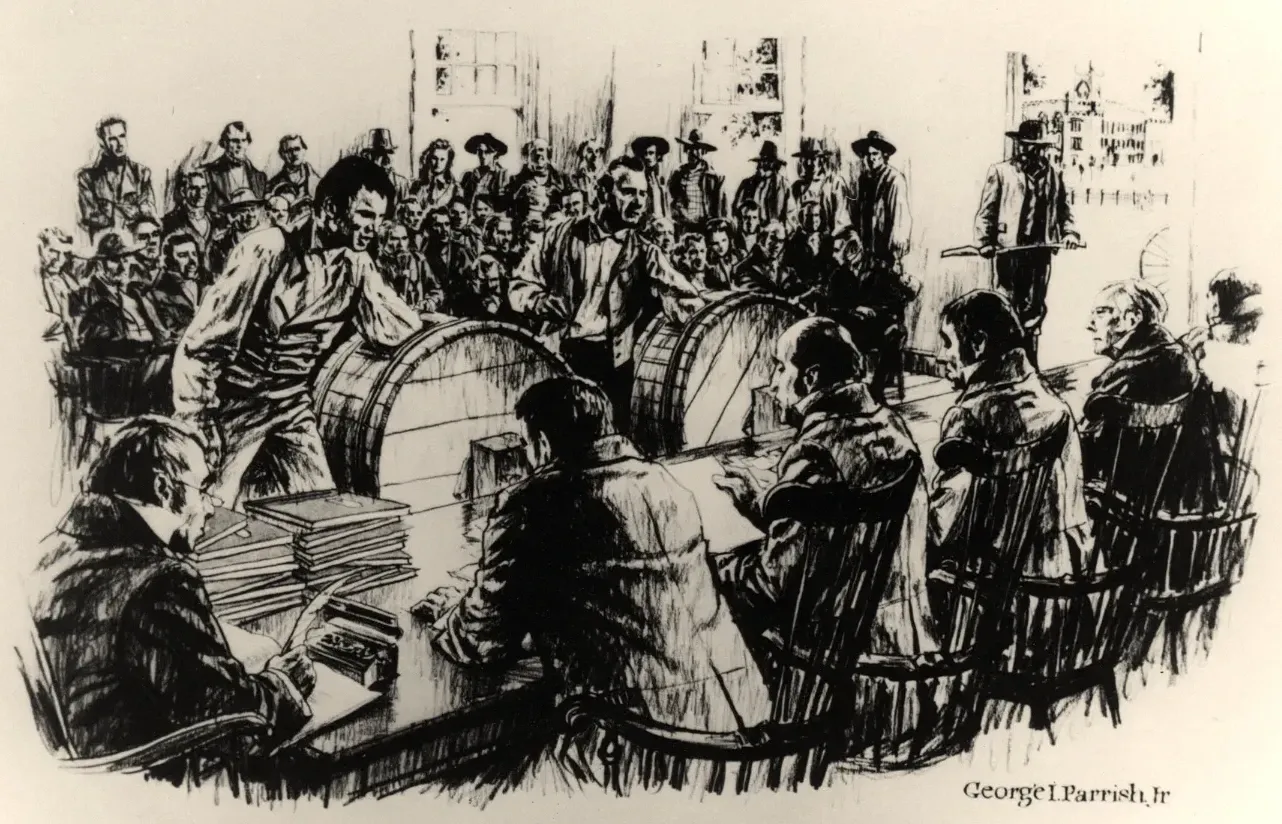
A lottery is a beautiful machine for laundering. Land comes in as plunder and goes out as luck. Nobody who wins a 202½-acre square of Muscogee forest has dispossessed anybody—he just got lucky, fair and square, everyone had the same chance. (Everyone white, male, or widowed, anyway.) The wheel converts a treaty signed under pressure at a mineral spring into thousands of individual clean consciences.
Two of those squares are the ones we're concerned with: Lots 82 and 83 of the 15th District, originally Henry County. If you go looking for them in the earliest records under DeKalb County you'll come up empty, because DeKalb was created out of Henry the following year, 1822. Same dirt, new jurisdiction. It won't be the last time the paperwork changes while the ground stays put.
The second treaty
After 1821 McIntosh's position inside the Muscogee Nation eroded. The Nation's Council considered executing him. With Mitchell out for his connection to the smuggling of enslaved people, a new federal agent, John Crowell, came in and cut off McIntosh's access to federal resources. Gone was the patronage that had made him powerful. Meanwhile his cousin Troup, now governor, was pressing Washington to make good on the Compact of 1802, in which the United States had promised Georgia it would extinguish all Indian title within the state. The squeeze was on from both directions, and McIntosh resolved it the way he had before: he sold.
On February 12, 1825—this time at the McIntosh Inn, the hotel he'd built at Indian Springs on his 1821 reserve, on his fee from the last sale—McIntosh and a small, mostly Lower Creek contingent signed the second Treaty of Indian Springs, ceding essentially all remaining Muscogee land in Georgia for $200,000. Only six chiefs signed. The Council had authorized none of it. And buried in the document was an article granting McIntosh an additional personal payment for the very tracts the 1821 treaty had reserved to him. He had sold the Nation's land, and then sold back his own cut of the last sale, the broker's fee compounding on itself.
Under the Nation's law—the law McIntosh had supported—the sentence for this was death.
Which is where we came in: the dark before dawn on April 30, Menawa and two hundred men around the house at Acorn Bluff, the fire, the shots.
Killing the broker did not void the sale. The Muscogee Nation would fight the fraudulent 1825 treaty in Washington, but the 1821 cession stood, and by the time McIntosh died it was already three years too late for District 15. The lottery wheel had turned in 1821 and the tickets were long since drawn.
Lot 82 and Lot 83, side by side on a creek that flows into the South Fork of the Ocmulgee River, which later dropped the middle of that phrase and just became the South River, which the Muscogee had known as Weelaunee, went to two men who could hardly have been less alike: a wounded veteran of the Revolution living quietly in Baldwin County, and a Savannah privateer whose paper claim to 202½ acres of Georgia forest was, I promise you, the least interesting thing about him. Neither man ever came to see his prize. One of them was busy. What he was busy with—a captured slave ship, a Supreme Court case that treated human beings as "proceeds," and an American law that pretended to forbid all of it—is the next installment.